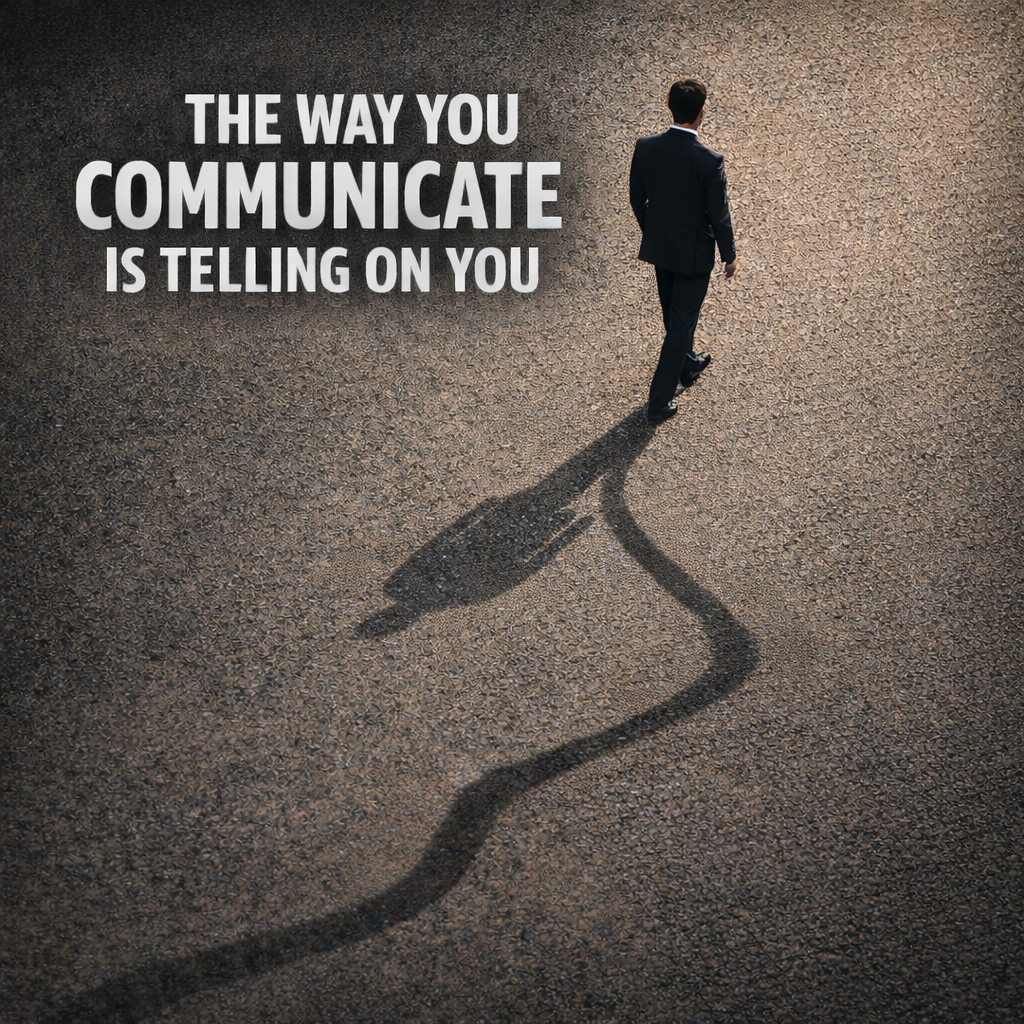
Theme: The Way You Communicate Is Telling On You
Matthew 12:34 (KJV) “O generation of vipers, how can ye, being evil, speak good things? for out of the abundance of the heart the mouth speaketh.”
The Way You Communicate Is Telling On You
For the past five weeks, the focus has been internal.
Mindset. Identity. Discipline. Execution. Alignment.
The work was about rebuilding how you think and how you see yourself. That was the foundation.
But mindset alone is not enough.
You can think right and still communicate wrong—and when that happens, your results will not reflect your potential.
Because how you think is internal, but how you communicate is what the world experiences.
Now it’s time to build the frame. The structure. The metal that carries everything you’ve been developing.
Every conversation, every response, every delay, every tone—these are not small moments. They are signals.
And those signals are training people how to experience you.
Whether you realize it or not, you’ve already built a pattern.
The question is… what is that pattern saying?
Communication Is Conditioning
Communication is not casual. It is not random. It is not just expression.
Communication is conditioning.
Every interaction is a repetition. Every repetition becomes a pattern. Every pattern becomes an expectation.
People are not responding to what you meant—they are responding to what you’ve consistently shown them.
If you’ve been inconsistent, they expect inconsistency. If you’ve been unclear, they expect confusion. If you’ve been solid, they expect stability.
And here is the truth most people overlook: conditioning does not require intention.
You don’t have to mean to train people. You only have to repeat something long enough.
Your habits, your tone, your timing, your reactions—everything has been teaching people something about you.
You’ve been building a brand through your communication, whether you realized it or not.
Misalignment Destroys Trust
Many people believe they are misunderstood.
But in most cases, the issue is not misunderstanding—it is misalignment.
Your words say one thing. Your tone says another. Your actions confirm something else.
And people do not trust words alone—they trust patterns.
Misalignment creates friction.
Now people have to interpret you. They have to question your consistency. They have to figure out what you really mean.
And when communication requires too much effort, people disengage.
Not because they don’t care, but because your signal is too inconsistent to trust.
The Science Behind Fear and Hesitation
Fear is not just emotional—it is biological. It activates the brain’s survival system, increasing perceived risk and decreasing your willingness to act boldly.
In this state, your focus shifts from opportunity to protection. You begin to analyze every possible negative outcome, which slows down decision-making and interrupts execution.
This is why hesitation feels so strong. Your mind is trying to protect you, even when there is no real danger. But you cannot build something meaningful while operating from a constant need to protect your comfort.
Preparation Changes Everything
Preparation is one of the most powerful tools for overcoming fear. When you prepare, your brain shifts from emotional response to logical execution.
Studies show that mental rehearsal activates the same neural pathways as physical performance. This means that when you practice, visualize, and study, you are already building the ability to execute.
Preparation reduces uncertainty. It builds familiarity. And familiarity reduces fear. When you’ve done the work consistently, you don’t have to panic in the moment—you perform.
People Experience You Before They Hear You
Before people process your message logically, they process you emotionally.
They feel your energy. They read your posture. They sense your confidence—or your hesitation.
And once that emotional impression is formed, it becomes the filter for everything else you say.
You can deliver a powerful message, but if the feeling was off in the beginning, it will not land the way you expect.
This is why presence matters.
People do not just listen to you—they experience you.
Trust Is Built Before Words Land
Trust does not begin when you explain yourself. It begins when people feel safe with you.
Consistency, clarity, and alignment signal safety.
Inconsistency, confusion, and forced communication signal risk.
Trust is not just emotional—it is biological.
Research from :contentReference[oaicite:0]{index=0} shows that high-quality, consistent communication triggers the release of oxytocin, a chemical that builds connection and trust.
Your communication is not just being heard—it is being processed at a deeper level.
People are constantly asking, “Is this safe? Can I trust this?”
Your consistency answers that question before your words ever do.
Consistency Creates Influence
When you show up the same way over time, people stop guessing and start expecting.
Expectation builds trust.
Trust builds influence.
Your presence becomes predictable—not in a negative way, but in a reliable way.
People know what they are going to get from you. They understand your standard. They recognize your pattern.
And when that happens, your name begins to carry meaning before you even speak.
You Are Always Communicating
Communication does not begin when you speak and end when you stop.
It is constant.
Silence communicates. Delays communicate. Energy communicates.
Your response time sends a message. Your lack of response sends a message. Your behavior under pressure sends a message.
You are always signaling something.
The question is whether your signals match your intention.
The Five Pillars of Effective Communication
To build communication that creates trust, influence, and alignment, five pillars must be present.
Clarity: If people cannot repeat it, they did not receive it.
Consistency: Repeated alignment builds trust over time.
Empathy: Communication must be understood from the receiver’s perspective.
Active Listening: Real communication adjusts based on feedback and response.
Integrity: Your message must match your life, or trust will break.
Without these pillars, communication becomes unstable.
With them, communication becomes influence.
The Cost of Poor Communication
Poor communication carries a cost.
It costs opportunities. It costs relationships. It costs influence. It costs growth.
Not because you are incapable, but because people do not experience you as reliable.
Perception drives decisions.
If your communication creates doubt, hesitation, or confusion, people will move differently with you.
And over time, that gap between your potential and your results will continue to widen.
The Communication Audit
Take a moment and ask yourself one question.
What do people feel when they see your name pop up on their phone?
Do they feel clarity or confusion?
Peace or pressure?
Value or inconsistency?
Whatever they feel—that is your brand in real time.
If you do not like the response, do not blame the people.
Change the pattern.
Because communication is not just what you say—it is what people have learned to expect from you.
The way you communicate is telling on you.


