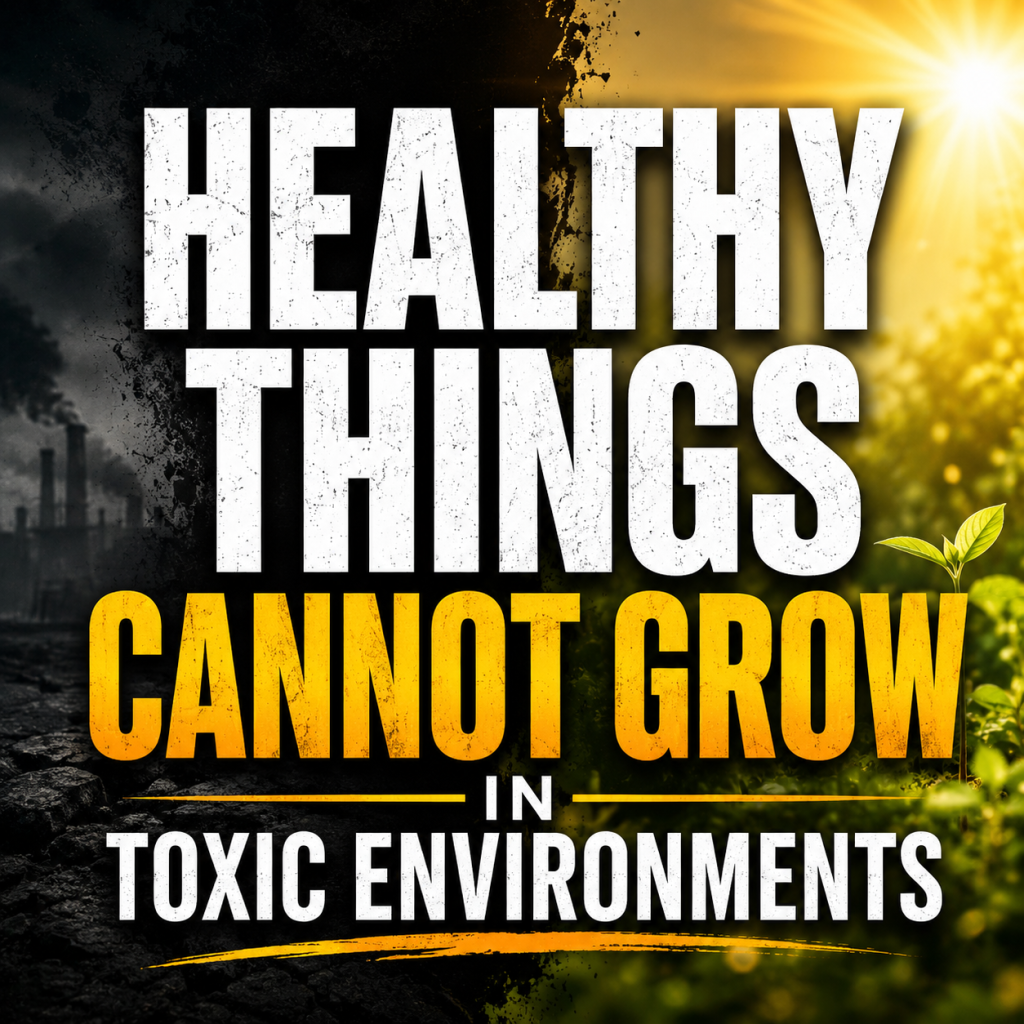
Theme: Healthy Things Cannot Grow in Toxic Environments
1 Corinthians 15:33 (KJV) - Be not deceived: evil communications corrupt good manners.
Healthy Things Cannot Grow in Toxic Environments
Culture is not just something businesses talk about during meetings or place inside mission statements. Culture is the emotional and behavioral atmosphere people live in every day.
It affects communication, trust, creativity, accountability, leadership, relationships, and growth.
Many people keep trying to grow inside environments that are slowly draining them.
They continue trying to build, lead, heal, create, and develop while surrounded by instability, fear, tension, dysfunction, and emotional exhaustion.
Then they wonder:
- Why does everything feel heavy?
- Why do healthy people keep leaving?
- Why does growth feel unstable?
- Why does trust keep breaking down?
The answer is simple:
Healthy things cannot grow in toxic environments.
Environment Shapes Behavior
People often focus on talent, intelligence, vision, and potential. But talent alone is not enough.
Talent is a seed. Environment is the soil.
Even the strongest seed struggles in unhealthy soil.
A healthy environment creates:
- communication
- trust
- confidence
- accountability
- emotional safety
- collaboration
A toxic environment creates:
- fear
- silence
- instability
- emotional exhaustion
- manipulation
- distrust
Over time, people stop operating from purpose and start operating from protection.
That is why two people with the same level of talent can produce completely different results depending on the environment surrounding them.
People do not simply grow in environments.
They adapt to them.
Toxicity Changes People Quietly
Toxicity rarely changes people overnight.
It changes them gradually.
People slowly begin:
- lowering standards
- avoiding honesty
- becoming emotionally guarded
- shrinking their communication
- protecting themselves instead of growing
At first, unhealthy behavior feels uncomfortable.
But over time, dysfunction becomes familiar.
People begin saying:
- “That’s just how they are.”
- “That’s how this place operates.”
- “I’m just trying to stay out the way.”
That is dangerous because the moment unhealthy behavior stops shocking people, it starts shaping them.
Chaos feels normal. Broken communication feels normal. Stress feels normal. Distrust feels normal.
That is how toxic culture quietly spreads.
Culture Silently Trains Behavior
Every environment trains behavior.
Healthy environments train:
- communication
- trust
- honesty
- accountability
- growth
Toxic environments train:
- survival
- fear
- silence
- politics
- emotional self-protection
Culture is not built through speeches alone.
Culture is built through repetition.
People study:
- what leadership ignores
- what behavior gets rewarded
- who avoids accountability
- how conflict is handled
- what leadership tolerates
Eventually, people stop asking:
“What’s right?”
And start asking:
“What survives here?”
That is when the environment becomes dangerous.
Toxicity Spreads Faster Than Excellence
Toxicity spreads quickly.
Faster than trust. Faster than discipline. Faster than excellence.
Research around emotional contagion shows that people subconsciously absorb the emotional climate around them.
Stress, instability, negativity, fear, and tension spread through environments rapidly.
One toxic person can affect an entire team.
One emotionally unstable leader can disrupt an entire organization.
One manipulative personality can poison an entire atmosphere.
Behavior does not stay contained.
It multiplies.
That is why leaders must intentionally protect culture instead of assuming it will protect itself.
Leadership Sets the Environmental Tone
Leadership is not only direction.
Leadership is atmosphere.
A leader’s:
- emotional consistency
- communication style
- tolerance
- accountability
- emotional maturity
…all shape the room.
Culture is not defined by what leaders preach.
Culture is defined by what leaders consistently allow.
People do not only listen to leaders.
They study them.
Healthy People Become Unhealthy in Toxic Systems
Sometimes the problem is not that people are weak.
Sometimes the system itself is unhealthy.
Strong people eventually become exhausted in toxic environments.
Creative people stop sharing ideas. Passionate people become emotionally numb. Honest people stop speaking up.
Fear changes behavior.
Eventually, people stop growing and start surviving.
That is why some workplaces, relationships, ministries, and organizations slowly lose healthy people.
But unhealthy environments eventually drain healthy people emotionally.
Psychological Safety Changes Performance
Google’s Project Aristotle found that the number one factor in high-performing teams was not intelligence or experience.
It was psychological safety.
People perform differently when they feel emotionally safe.
Healthy environments allow people to:
- communicate honestly
- ask questions
- admit mistakes
- challenge ideas respectfully
- innovate without fear
Toxic environments create emotional danger.
Fear shuts down creativity and strategic thinking.
People cannot consistently grow where trust is constantly broken.
The Internal Environment Matters Too
Not all toxicity is external.
Sometimes the unhealthy environment is internal.
People can carry:
- fear
- insecurity
- unresolved trauma
- scarcity thinking
- perfectionism
- emotional instability
…into every room they enter.
That means the environment follows them.
Healthy environments cannot be built from internally toxic foundations.
Final Thought
Healthy things cannot grow in toxic environments.
Not businesses. Not teams. Not families. Not ministries. Not relationships. Not people.
Growth is not sustained by talent alone.
Growth is sustained by healthy environments.
If healthy things are struggling to grow around you, do not only inspect the seed.
Inspect the soil.
Because you are not only responsible for results.
You are responsible for the atmosphere producing those results.


