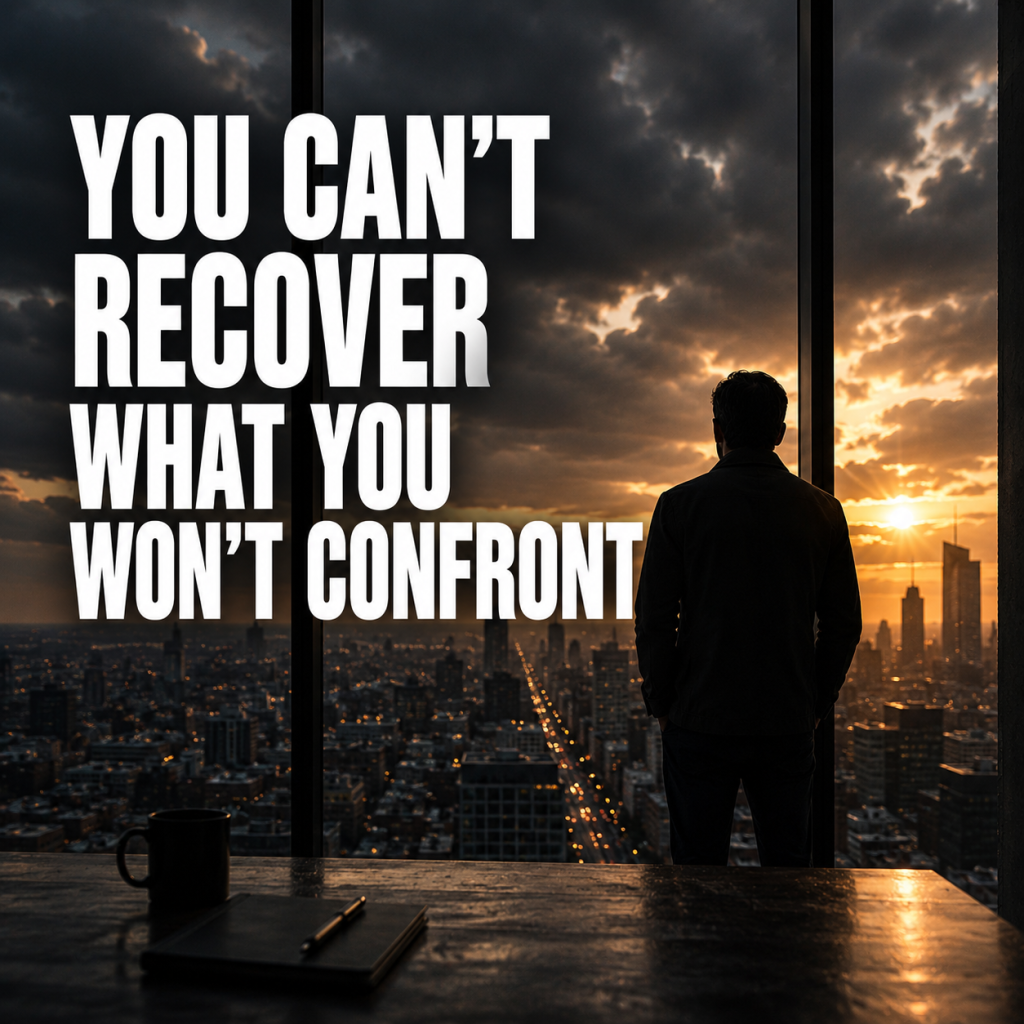
Theme: You Can’t Recover What You Won’t Confront
1 Samuel 30:6 (KJV) - And David was greatly distressed; for the people spake of stoning him, because the soul of all the people was grieved, every man for his sons and for his daughters: but David encouraged himself in the LORD his God.
David Walked Into Smoke
David did not return from battle expecting to become a case study in leadership.
He expected to see familiar faces, hear children playing, and settle back into the rhythm of ordinary life.
Instead, he walked into smoke.
The city of Ziklag had been burned to the ground. The Amalekites had raided the city while David and his men were away, carrying away their wives, children, livestock, and possessions.
Nothing looked familiar anymore.
The people who had followed David through victories and wilderness seasons were now overwhelmed with grief and began talking about killing the very leader they once trusted.
It is one of the most human moments in Scripture.
“And David was greatly distressed; for the people spake of stoning him, because the soul of all the people was grieved, every man for his sons and for his daughters: but David encouraged himself in the LORD his God.”
— 1 Samuel 30:6 (KJV)
Most people read this story looking for recovery.
The first lesson is confrontation.
Before David recovered his family, his possessions, or his city, he first confronted reality and recovered himself.
The Truth Has A Way Of Waiting
Most organizations do not collapse in a single day.
They collapse one avoided conversation at a time.
One delayed decision.
One ignored warning sign.
One uncomfortable truth that everyone hopes will disappear on its own.
Leadership researchers call this normalization bias—the tendency to believe that today’s problem will somehow solve itself tomorrow.
Businesses ignore declining sales.
Families avoid difficult conversations.
Leaders postpone hard decisions because confronting reality feels uncomfortable.
Reality, however, is remarkably patient.
It waits.
The financial statement waits.
The broken culture waits.
The strained relationship waits.
The question is not whether truth exists.
The question is how long we are willing to avoid it.
What The Fire Couldn’t Take
Loss has a way of narrowing our vision.
We become experts at counting what disappeared while overlooking what remains.
David lost his city.
He lost his possessions.
He temporarily lost his family.
He even lost the confidence of his own men.
Yet the fire never touched his experience.
It did not destroy his wisdom.
It could not burn his character.
It could not steal his faith.
It could not remove his ability to lead.
Great recoveries begin with a different question.
Not, “What did I lose?”
But, “What still remains?”
The answer is often far greater than we realize.
Recovery Is An Ownership Decision
When Steve Jobs returned to Apple in 1997, the company was approaching collapse.
His first decision was not expansion.
It was elimination.
Projects were cut, priorities were clarified, and reality was confronted.
Recovery required honesty before it required innovation.
David demonstrated the same principle thousands of years earlier.
He could have blamed the Amalekites.
He could have blamed his men.
He could have blamed his circumstances.
Instead, he strengthened himself, sought God’s direction, and prepared to move.
Ownership is not accepting blame for everything that happened.
Ownership is accepting responsibility for what happens next.
That is where every meaningful recovery begins.
Applying the Recovery Mindset to Your Life
Whether you are leading a nonprofit, managing a family, or navigating a career transition, the lesson from Ziklag remains the same: Ownership is the precursor to restoration.- Audit your reality: Stop managing the optics and start managing the facts. What is actually broken? What is still intact?
- Strengthen your internal resolve: Before you seek external resources or advice, ensure your own mindset is stabilized. A leader who is internally fragmented cannot lead a group through a crisis.
- Move before you are certain: David didn’t have a map; he had a mandate. Once he confronted the truth and aligned himself, he didn’t wait for perfect conditions to pursue recovery. He simply moved.
Final Thought
Every person will eventually experience a season that looks like Ziklag.
A plan that failed.
A relationship that changed.
A business that struggled.
A dream that feels delayed.
In those moments, the temptation is to focus on what is gone.
David chose a different path.
He confronted reality without surrendering hope.
He strengthened himself before he strengthened anyone else.
He sought wisdom before he sought solutions.
He accepted responsibility before he pursued recovery.
The city had burned, but his leadership had not.
The possessions were gone, but his purpose remained.
The circumstances were devastating, but they did not define his future.
Recovery is not waiting for life to become easier.
Recovery is having the courage to confront reality, take ownership of the next decision, and move forward with wisdom.
Because recovery doesn’t begin when circumstances change.
Recovery starts with you.


